Sunday, May 15, 2011

Pilgrimage, the one I would like to make

The pilgrimage I would like to do is to go in a poor country and pass a mouth there. Basically my goal is to realise the chance I have to live in a rich country and to refocus my mind on the good way, on the fact that money to bring happiness…

During this solitaire pilgrimage, I would like to pass a minimum of two weeks in an orphanage, as a helper. This is not a dream, but kind of. I would like to be there for these children, to listen them, to carry them… My goal is to realise the chance I have to born in Quebec, to have a good family, who love me. And I think they could give me a new way to see life. I am pretty sure that they will be an example of courage and determination for me. After this experience I will be more attentive to what happens in my life, and how I could help each other with basic things.

Another thing I would like to do during this pilgrimage is to pass a week with a typical family, and live like they live. One week as a poor person, I think that everyone needs it to realise the reality of these people, not only what the media tell us. I think and learn that this brings us to make a reflection on our life, to see our hearth and how it is. So my goal is to change my comportment in my life, which is too selfish.

The last think I would like to do is to go in a hospital and talk with the patient about their story, there way of life…

Finally, I would like to do this pilgrimage as soon as possible. I would like to serve to something in another country, a poor one.

How the pilgrimages are related to time and place?

The major reason why people made a pilgrimage, traditionally, is to visited holy shrines. The pilgrims integrated a spiritual, a physical or mental well being in the visit of this kind of site. The people basically want to relax inwardly when they made a pilgrimage. So the pilgrimage could be considered as religious. Today, the reason to make it could be very different, some people want to visit the Disney theme parks, some others would like to know more about a famous people as Elvis Presley (in this pilgrimage, there is a religious part if people want).


The place people choose could be for many reasons as the most famous one: religious. But there is much other reason: to find freedom, to change them mentally of life, to create a project, to learn about history, to have vacation, to know the world… The reasons are infinity, but the important thing when you make a pilgrimage is to really what you research, or what you want of it. It exist many pilgrimage that are organized, or create for people, but you could create your own one if you want. For example, it was possible to visit the ancient sites of Delphi and Olympia on the Greek mainland which is considered sacred sites.

The place is important because of its history, like sacred place.

The time of doing pilgrimage could be for many reasons, if we take the example of the Elvis one, we could made a pilgrimage at the date of his death, to remember this artist. For others places, it could be for an event, as the crash of a plane, to remember it.  It could be for a season, like the spring which is the season of the renaissance, people would like to rebuilt their inside mentality, or resource them self. As we know, the dates need to be important in the head of the person who made it.

Finally, the place is important and could be very different for one person to the other, depending on the reason the person made the pilgrimage. The time is a decision very important depending on what the person is researching for.

Contrast between European art and Africa art

European art and non-European art are kind of different. There are some similar things, but still is two distinct type of art. I will contrast and compare the architecture and the portraiture of the West and of the Africa.
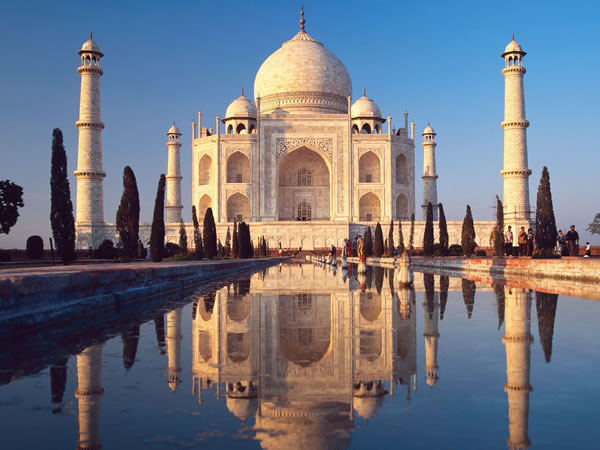
First, the commemorate thing is mainly different, depending on the place and the culture. In Africa, “Obelisks were created to commemorate the reigns of rules and to serve as gift to the gods whose temples they adorned.” (Marquardt, 2005, p.60) In the same way, Taj Mahal is a tomb created by Mumtaz Mahal for his favorite of three wives. These are architecture really important in memory of those people. In Europe, the construction of column were not simple, it contain a lot of detail representing a moment, the life of someone… for example, the Column of Trajan detail’s represent a scene from the Dancian campaign… So the way to commemorate something in both cultures is different, but stays important in the understanding of these cultures.


 Second, the architecture did not look similar. In Europe, the buildings were constructing with large column on the front, there is a basilica, the hall for assembly, a rotunda, the vast open space of the huge, and an example of this kind of architecture is the Pantheon. In Africa, the pyramids were in vogue. The statues were very present in the place where the people were assembling. The kingdom and power were represented more in statues than in big building as European art.


 Third, in both art styles, the head statues are important. In Africa, the head were made to represent an important person as the king. The style was more abstract than the Europe one. In Europe, the head, like the one of Constantinople, were place on the front of the forum. This head were more naturalistic than the Africa one.

Arts stay art whenever it looks like. The culture are different and the values too, so the arts cannot be the same everywhere.

Sunday, March 20, 2011

Kara Walker

Ask yourself how does she use storytelling with her cut-outs and the idea of the cyclorama?  
She puts the cut-outs, in a sequence and then she put other images on it, to demonstrate the sentiments. This makes us felling the emotions of this particular event. She creates illusions in her painting and cut-outs, so then we could see the past and the present in the same image. We should be able to see the death in her cyclorama, but it’s bringing us to put our self at that time and live the emotions and the feeling of these events.

Our identity is constantly at work, on the move, and it is not static.  Kara Walker identifies herself to certain stories.  Does she change them, and if so, why?  
Yes, she changes the certain stories, but not at all. She try to change it to make an illusions in this epic moment, or to put some images to demonstrate another part of this event, like the political problems, just to put a correlation between the story and the world event. She identifies herself in certain stories, because she put herself in the context and in the felling of the story.

Now, for your journal, tell the reader how Kara Walker brings together storytelling and her sense of identity.
She takes a story, but not only the facts, but the sense of the identity too.  In fact, she put some details to express the sentiment of the people of the story. It is important to understand this step to see the real event on her art, so all part of it is a part of the identity of the storytelling. She tries to figure out the identity of what she makes to make it unique and special for the viewer.  So briefly she put her sense of identity in her art, so it creates a storytelling more influent.
Then, tell the reader how storytelling is part of your identity.  We all have stories that have been told to us, by family, by friends, and we learn from these stories, we were changed by these stories.  Select one and relate how it is part of your identity.
Two years ago, I had an accident and I broke my neck. Since this time, I can’t do any sport, and I was really sportive. I was very depressive to have this handicap for the rest of my life. A friend told me a story about a person who have the same type of accident, and that today he is able to do many physical (not hard) thing. In this story the person use a lot of determination and perseverance. So this person inspired myself, and helped me to pass over this event. For sure today, I can’t do many physical thing, but I’m in life…

Reflection on the importance of the arts for your own personal development

For me, the arts are very important to create an opinion. If we take a painting, and the only thing we see it was the portrait, we are wrong. But, if we analyse and said there are these colors because of this significance and this object is there to tell us another thing, now we really use our creativity and logic of mind.
“Learning about the arts contributes to personal growth and development by stimulating our senses and sensibilities and by awakening the creative and expressive aspects of our being.”[1]
“Art, along with music is a universal language. Through the ages, transcending time and space, artists have told us their stories and conveyed their emotions through drawings, paintings, architecture and sculptures. We have observed their joy, sorrow, peace and frustration expressed in their work.
Likewise, art allows us to express ourselves.
"Through that expression, we communicate. When we enjoy and look at someone else's art, we see the world through their eyes. When we create our own art, we allow others to see it through ours. Whether you create your own art, or appreciate the beauty and genius of the great masters, it lifts and inspires you beyond your everyday consciousness. Enjoying art is relaxing, therapeutic and rejuvenating.”
[2]
So, the arts are a part very important for the development of our individual thinking of the life and of some subject we need to deal with.  As these citations said, the emotions are express in our thinking, our understanding, our interpretation and our mentality. The more I use creativity, the more I will be able to see the event, the arts, the judgement, the argument with another vision.


[1] http://www.essentiallifeskills.net/thearts.html
[2] http://www.essentiallifeskills.net/thearts.html

Reflection on the importance of the discipline of art history to a liberal arts education.

First, it helps to see over the first impression. The critical thinking is a big part of the liberal arts education. This development of meaning can lead individuals to become conscientious about social responsibilities to extract the full range of potential for creative thinking. The art history serves to search over the basic information we seen. For example, the study of the iconography could help us to determine the importance of each part of a piece of art.
Second, it helps in the development of the abilities to adapt to changing circumstances. The creativity starts with the understanding of the history of arts. Novel perspectives can help to learn abstract thinking. The prodigious power of creativity is another paramount reason to appreciate a liberal arts education.
Third, it develops the judgement, but to have a good judgement, we need to be able to thing independently. The art history development this side of thinking, the side we need to have to see the difference between our opinion and the one of another person. We all are different, so in this discipline we all seen the arts and the subjects differently from the other.
“Knowledge of many subject areas provides a cross fertilization of ideas, a fullness of mind that produces new ideas and better understanding. Those sudden realizations, those strokes of genius, those solutions seemingly out of nowhere, are really almost always the product of the mind working unconsciously on a problem and using materials stored up through long study and conscious thought. The greater the storehouse of your knowledge, and the wider its range, the more creative you will be. The interactions of diversified knowledge are so subtle and so sophisticated that their results cannot be predicted. When Benjamin Franklin flew a kite into a storm to investigate the properties of electricity, he did not foresee the wonderful inventions that future students of his discoveries would produce--the washing machines, microwave ovens, computers, radar installations, electric blankets, or television sets. Nor did many of the inventors of these devices foresee them while they studied Franklin's work.”[1]


[1] http://www.virtualsalt.com/libarted.htm